 Greyfits
What Does GSM Mean? Your Complete Fabric Weight Guide
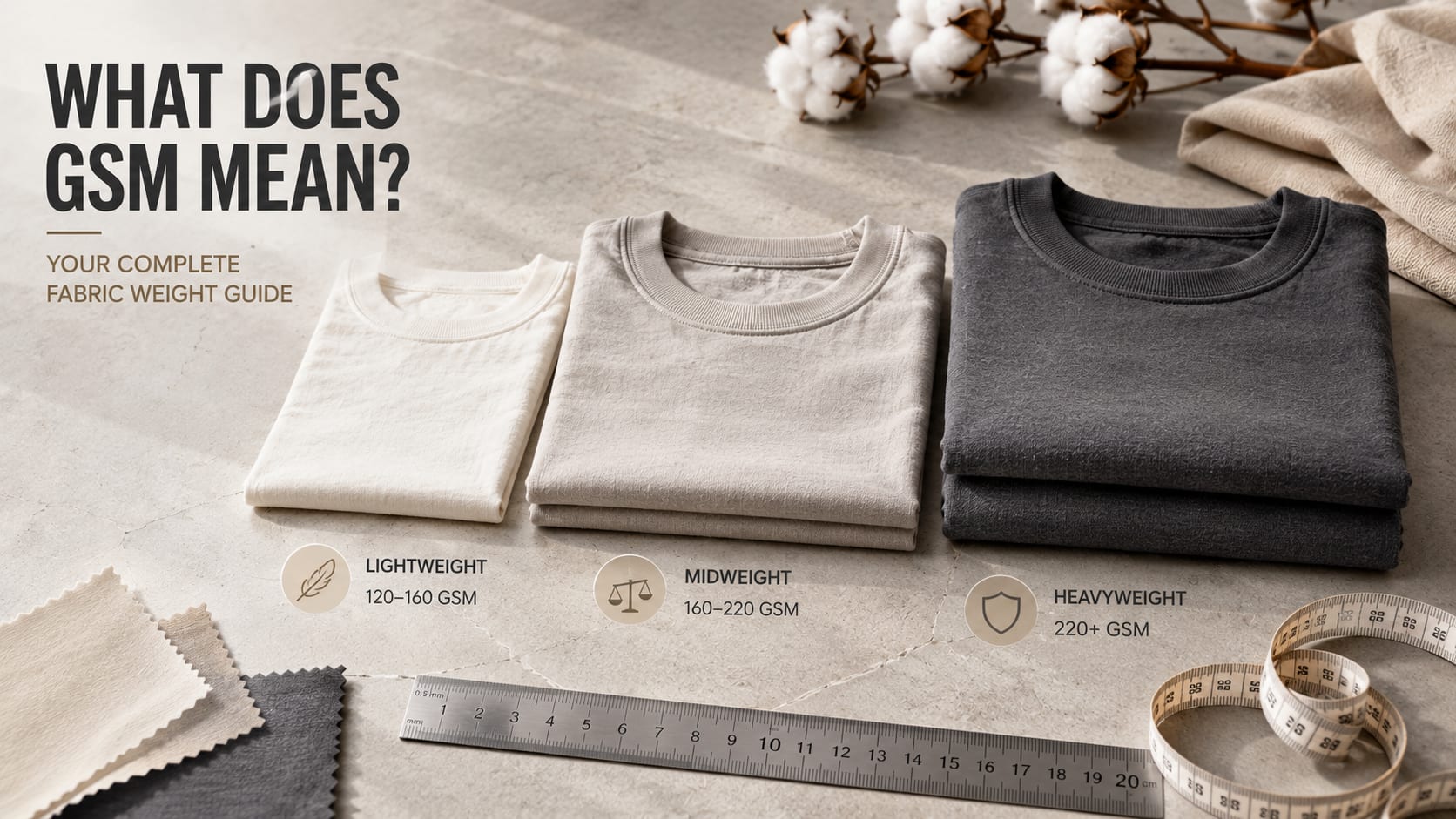
GSM stands for grams per square metre, a standard unit used to measure fabric weight. It helps compare fabrics based on weight, but doesn't tell the whole story about quality. Understanding GSM can help you make informed buying decisions.
Introduction
When shopping for clothing, you’ve probably seen product descriptions mentioning 180 GSM, 240 GSM, or 350 GSM. While these numbers are common in the apparel industry, many shoppers aren’t sure what they actually mean or how they affect the quality of a garment.
GSM, short for grams per square metre, is a standard measurement used to describe the weight of a fabric. It helps manufacturers, retailers, and consumers compare fabrics based on how much one square metre of material weighs.
Although GSM is often associated with quality, it doesn’t tell the whole story. A heavier fabric isn’t automatically better than a lighter one. Fibre quality, yarn construction, knitting method, and garment manufacturing all play important roles in determining how a piece of clothing looks, feels, and performs.
Understanding GSM can help you make more informed buying decisions, whether you’re choosing a lightweight T-shirt for hot weather or a heavyweight hoodie designed for durability and structure.
In this guide, we’ll explain what GSM means, how it’s measured, why it matters, and how to choose the right fabric weight for different types of clothing.
Key Takeaways
GSM stands for grams per square metre, a standard unit used to measure fabric weight.
A higher GSM generally indicates a heavier fabric, not necessarily a higher-quality one.
Lightweight, midweight, and heavyweight fabrics each serve different purposes.
GSM should be considered alongside fibre quality, yarn type, fabric construction, and garment manufacturing.
Understanding GSM helps you choose clothing that suits your comfort, climate, and intended use.
What Does GSM Mean?
If you’ve ever compared T-shirts, hoodies, or other garments online, you’ve likely seen specifications such as 180 GSM, 240 GSM, or 350 GSM. These numbers refer to the weight of the fabric and provide useful information about how the material may feel and perform.
GSM Definition
GSM stands for grams per square metre. It is the standard unit used to measure the weight of fabric.
In simple terms, GSM tells you how much one square metre of a fabric weighs in grams. For example:
A 160 GSM fabric weighs 160 grams per square metre.
A 240 GSM fabric weighs 240 grams per square metre.
A 350 GSM fabric weighs 350 grams per square metre.
Because it is a standard measurement, GSM allows manufacturers and consumers to compare fabrics consistently, regardless of where they are produced.
Why GSM Matters
Knowing a fabric’s GSM helps you understand how it is likely to feel, but it doesn’t tell you everything about its quality.
Generally speaking:
Lower GSM fabrics tend to feel lighter and more breathable.
Midweight fabrics offer a balance between comfort and durability.
Higher GSM fabrics usually feel thicker, heavier, and more structured.
However, GSM measures weight, not craftsmanship. Two fabrics can have the same GSM yet differ significantly in softness, durability, and overall quality due to differences in fibre selection, spinning methods, knitting techniques, and finishing processes.
For this reason, GSM should always be considered alongside other characteristics rather than used as the sole indicator of quality.
How Is GSM Measured?
Although shoppers usually see GSM listed as a simple number on a product page, manufacturers follow standard testing methods to determine that value.
Grams Per Square Metre Explained
To calculate GSM, a precisely measured piece of fabric is weighed. The result is then expressed as the equivalent weight of one square metre of that fabric.
This standardised approach ensures that fabrics can be compared fairly, whether they’re used for T-shirts, hoodies, denim, towels, or upholstery.
It’s important to note that GSM measures fabric weight, not the weight of an entire garment. A finished T-shirt may weigh more or less depending on its size, design, and construction.
How Manufacturers Measure GSM
In textile manufacturing and quality control, fabric samples are cut to a specific size using precision tools and weighed with highly accurate scales.
The measurements are then converted into grams per square metre according to recognised testing procedures.
Consumers don’t need to perform these calculations themselves. The GSM listed by reputable manufacturers is typically determined during production and quality assurance.
What Does GSM Tell You About Fabric?
GSM provides valuable insight into how a fabric is likely to look, feel, and perform, but it shouldn’t be interpreted in isolation.
Fabric Weight
The most direct information GSM provides is fabric weight.
As the GSM increases, the fabric generally becomes heavier. This often gives the garment a more substantial feel, although the exact experience depends on the type of fibre and the way the fabric is constructed.
For example, a heavyweight cotton T-shirt usually feels denser than a lightweight cotton T-shirt because more material is used within the same surface area.
Thickness vs Density
A common misconception is that higher GSM always means a thicker fabric.
While this is often true, thickness and density are not the same thing.
Some fabrics are tightly knitted or woven, creating a dense material that isn’t dramatically thicker. Others may appear thicker because of the yarn or knit structure while weighing less than expected.
This is why two fabrics with similar GSM values can still look and feel quite different.
Comfort and Feel
Fabric weight influences how clothing feels when worn.
Lightweight fabrics often feel cooler and more breathable, making them well suited to warm weather.
Midweight fabrics provide a versatile balance suitable for year-round use in many climates.
Heavyweight fabrics usually offer greater structure and durability, giving garments a premium appearance and a more substantial feel.
Personal preference also plays a role. Some people prefer lightweight garments for maximum breathability, while others appreciate the drape and structure of heavier fabrics.
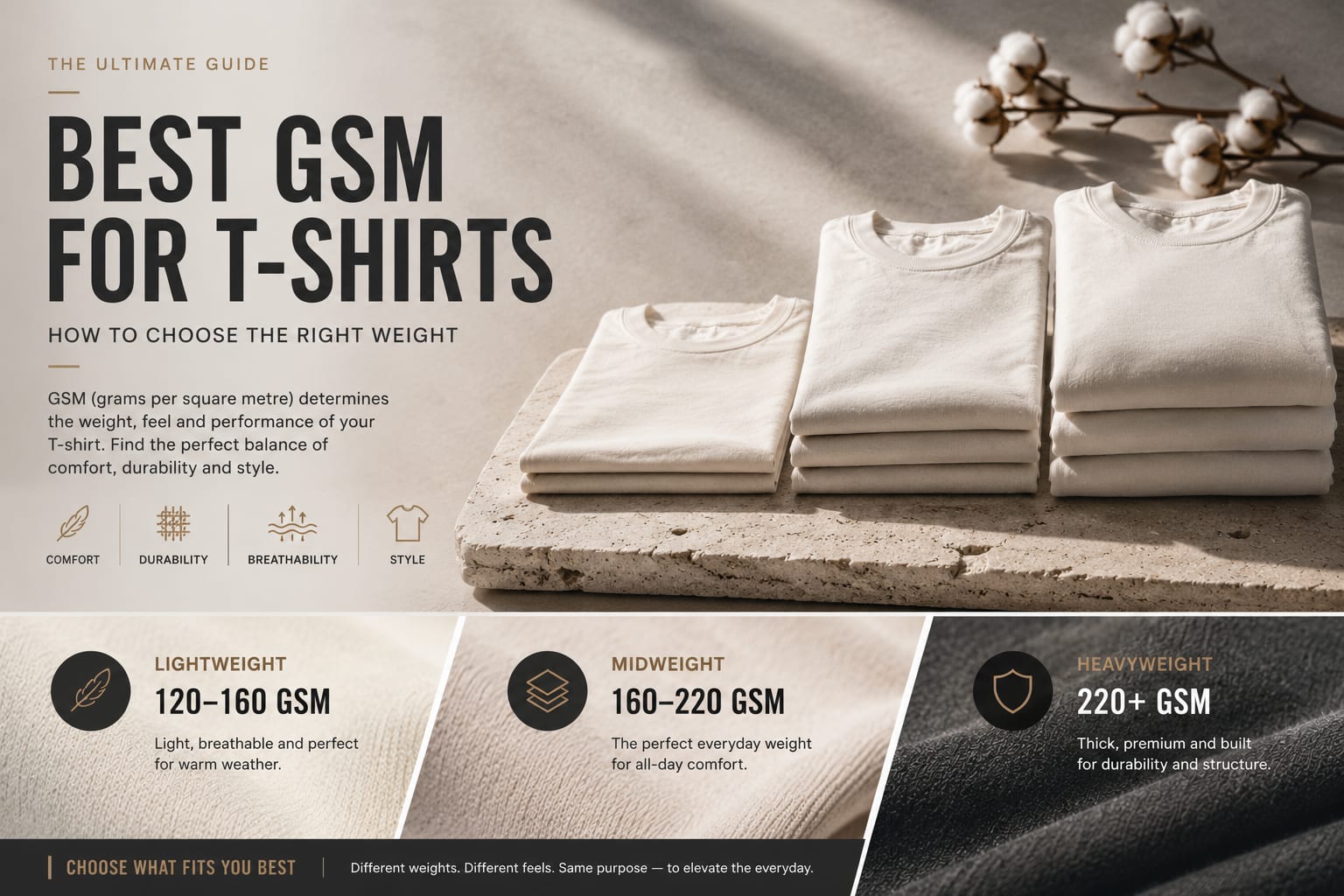
Common GSM Ranges for Clothing
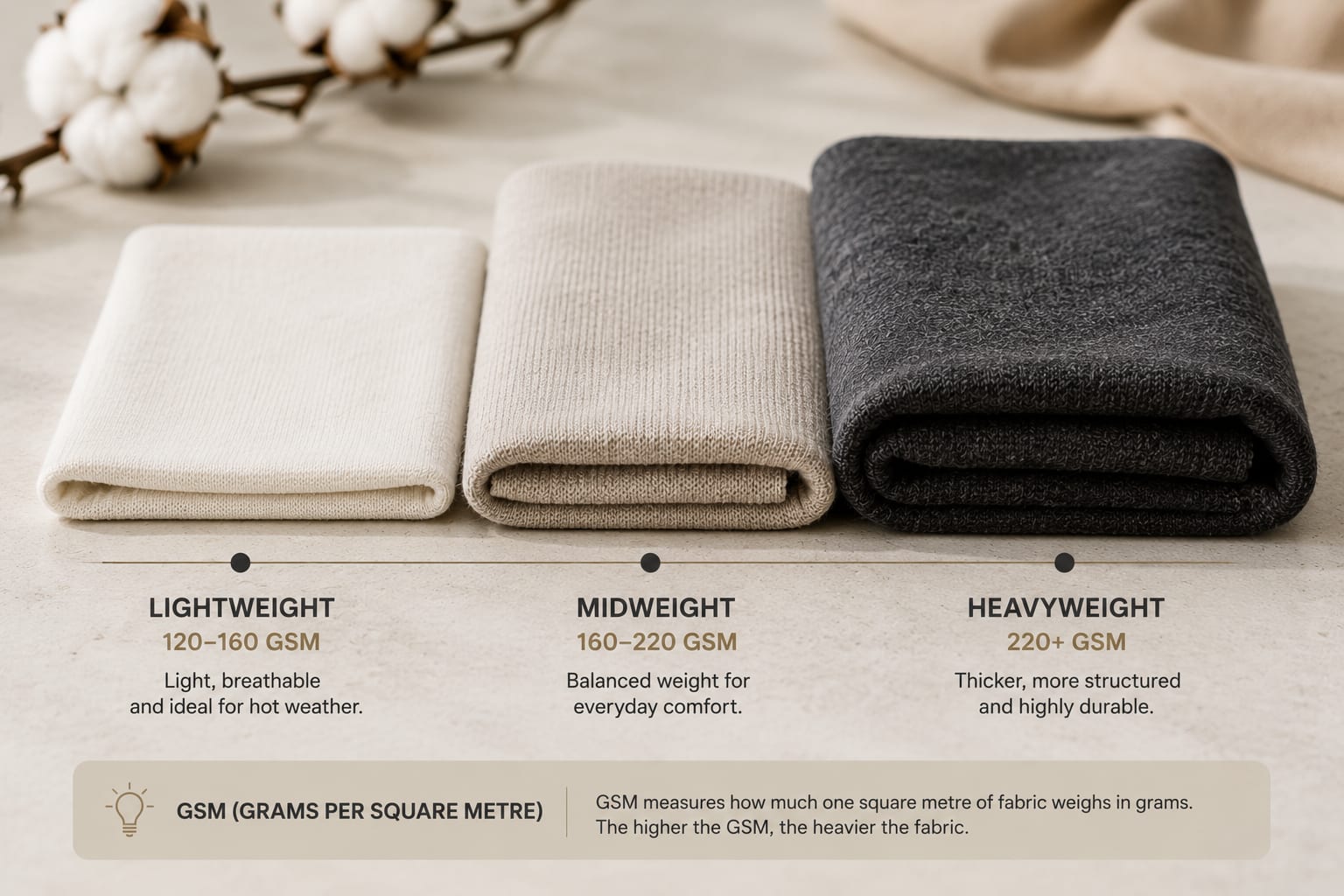
Not every garment requires the same fabric weight. The ideal GSM depends on how the clothing is intended to be worn, the climate, and the level of structure or durability you’re looking for.
Although there are no universal standards, the following ranges are commonly used throughout the apparel industry.
Lightweight Fabrics
Lightweight fabrics generally fall between 120 and 160 GSM.
These fabrics are designed to maximise breathability and comfort in warm weather. They are commonly used for:
Summer T-shirts
Base layers
Athletic wear
Lightweight casual clothing
Because they contain less material, lightweight fabrics usually feel softer and cooler against the skin. However, they may also be less structured and can wear out faster than heavier alternatives if not made from high-quality fibres.
Midweight Fabrics
Midweight fabrics typically range from 160 to 220 GSM.
This is one of the most versatile categories because it balances comfort, durability, and everyday practicality.
You’ll often find this GSM range in:
Everyday T-shirts
Polo shirts
Long-sleeve tees
Casual tops
For many people, midweight fabrics provide enough substance to feel durable without becoming too heavy for year-round wear.
Heavyweight Fabrics
Heavyweight fabrics generally start at around 220 GSM and can exceed 400 GSM, depending on the garment.
These fabrics are popular for:
Premium oversized T-shirts
Streetwear
Hoodies
Sweatshirts
Workwear
A higher GSM often gives clothing a more structured appearance and a substantial feel. However, heavier fabrics may retain more warmth and take longer to dry after washing.
The table below provides a general guide:
| GSM Range | Category | Common Uses |
|---|---|---|
| 120–160 GSM | Lightweight | Summer T-shirts, sportswear, base layers |
| 160–220 GSM | Midweight | Everyday T-shirts, polo shirts, casual wear |
| 220–300 GSM | Heavyweight | Premium T-shirts, oversized fits, streetwear |
| 300+ GSM | Extra Heavyweight | Hoodies, sweatshirts, workwear, luxury streetwear |
Note: These GSM ranges are general guidelines rather than fixed industry standards. Manufacturers may classify fabric weights differently depending on the garment type, fabric construction, and intended use.
Does a Higher GSM Mean Better Quality?
One of the biggest misconceptions in clothing is that a higher GSM automatically means a better garment.
In reality, GSM measures weight—not quality.
GSM vs Fabric Quality
A heavier fabric can feel more substantial, but weight alone doesn’t determine how well a garment is made.
For example, a 180 GSM T-shirt made from premium combed ring-spun cotton may feel softer, last longer, and retain its appearance better than a 280 GSM T-shirt made from lower-quality fibres.
Quality comes from the combination of materials, manufacturing, and construction—not from GSM alone.
Other Factors That Matter
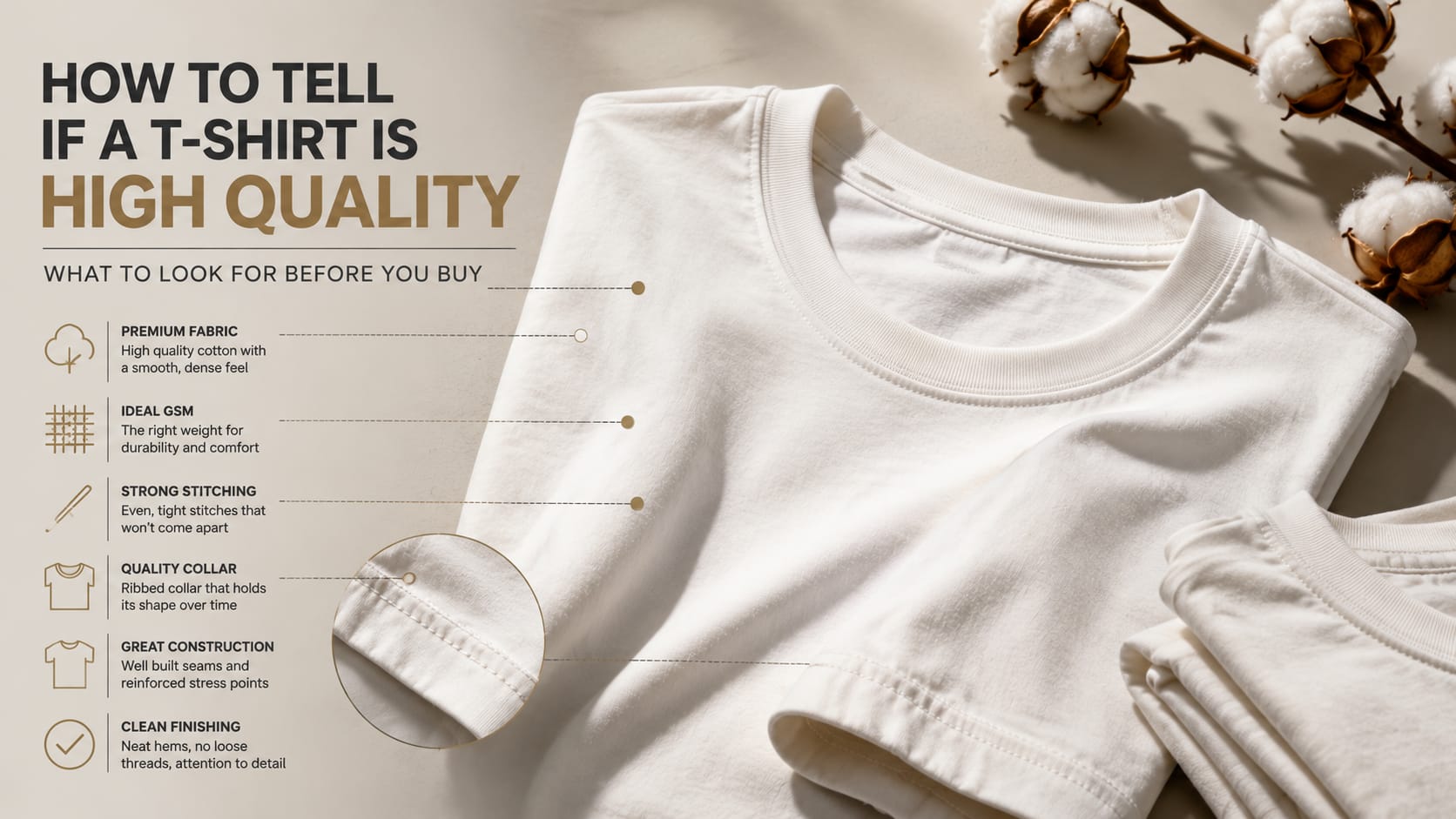
When evaluating clothing, consider GSM alongside other important characteristics, including:
Fibre quality – Longer, cleaner cotton fibres generally produce better fabrics.
Yarn construction – Ring-spun yarn is often smoother and stronger than conventional spun yarn.
Fabric finishing – Proper finishing can improve softness, appearance, and durability.
Garment construction – Well-designed patterns and quality stitching help clothing retain its shape.
Quality control – Consistent manufacturing standards reduce defects and improve reliability.
Looking at these factors together provides a much more accurate assessment than relying on GSM alone.
Choosing the Right GSM
The best GSM isn’t the highest one—it’s the one that matches your needs, environment, and personal preferences.
Everyday Wear
For daily use, many people prefer fabrics in the 160–220 GSM range.
These garments offer a balance of comfort, breathability, and durability, making them suitable for a wide variety of situations.
Sportswear
Sportswear often benefits from lighter fabrics because they allow greater airflow and can feel more comfortable during physical activity.
However, performance depends on the fibre blend and moisture-management properties as well as the GSM.
Premium T-Shirts
Many premium T-shirts use fabrics between 200 and 280 GSM, particularly for modern oversized styles.
Combined with high-quality cotton and strong construction, this range can provide a structured fit without feeling overly bulky.
Hoodies and Sweatshirts
Because hoodies and sweatshirts are designed to provide warmth and structure, they commonly use heavier fabrics, often 300 GSM and above.
The ideal weight depends on the intended use, climate, and personal preference.
Frequently Asked Questions
What does GSM stand for?
GSM stands for grams per square metre. It is the standard unit used to measure the weight of fabric by indicating how much one square metre of the material weighs in grams.
Does a higher GSM mean better quality?
Not necessarily.
A higher GSM indicates a heavier fabric, but it doesn’t automatically mean the garment is better made. Fibre quality, yarn construction, knitting method, stitching, and finishing all contribute to the overall quality of a piece of clothing.
What is a good GSM for T-shirts?
The best GSM depends on your intended use and personal preference.
120–160 GSM: Lightweight, breathable, suitable for hot weather.
160–220 GSM: Balanced for everyday wear.
220–300 GSM: Heavyweight, offering more structure and durability.
300+ GSM: Typically used for heavyweight T-shirts, sweatshirts, and hoodies.
Rather than focusing on GSM alone, consider it alongside fabric quality and garment construction.
Is 350 GSM good for a T-shirt?
Yes, if you’re looking for a heavyweight T-shirt.
A 350 GSM fabric provides a thick, structured feel that is commonly associated with premium streetwear and oversized garments. However, it may feel too warm or heavy for very hot climates or highly active use.
Does GSM affect durability?
It can, but it’s only one factor.
Heavier fabrics often contain more material, which may improve durability. However, the quality of the fibres, yarn, stitching, and construction also play significant roles in determining how long a garment lasts.
Can two fabrics have the same GSM but feel different?
Yes.
Two fabrics with the same GSM can differ in softness, stretch, thickness, breathability, and overall feel. These differences are influenced by the type of fibre, yarn construction, knit or weave, and finishing techniques used during manufacturing.
Conclusion
GSM is one of the most useful measurements for understanding fabric weight, but it should never be viewed in isolation. While it tells you how heavy a fabric is, it doesn’t reveal everything about its quality or performance.
When choosing clothing, consider GSM alongside factors such as fibre quality, yarn type, fabric construction, stitching, and finishing. Together, these elements determine how comfortable, durable, and long-lasting a garment will be.
Whether you prefer lightweight fabrics for breathability or heavyweight materials for structure and durability, understanding GSM gives you a stronger foundation for making informed purchasing decisions.
The next time you compare two T-shirts, don’t just look at the number. Use GSM as one part of a broader evaluation to choose clothing that best suits your needs.
Suggested Internal Links
Naturally link to these related Greyfits articles: