 Greyfits
Best GSM for T-Shirts: How to Choose the Right Weight
Not sure which GSM is best for a T-shirt? Learn the differences between lightweight, midweight, and heavyweight fabrics to choose the right balance of comfort, durability, and style.
What Is the Best GSM for a T-Shirt?
When shopping for a T-shirt, one of the most common questions is, “What GSM should I choose?” The answer isn’t as straightforward as picking the highest number.
The best GSM depends on how you plan to wear the T-shirt, the climate you live in, your preferred fit, and the overall feel you’re looking for. A fabric that’s perfect for one person may not be the right choice for another.
Understanding how different GSM ranges affect comfort, durability, and appearance will help you choose a T-shirt that matches your needs rather than simply following trends or marketing claims.
There Isn’t One Perfect GSM
There is no universal “best” GSM for every T-shirt.
A lightweight 150 GSM shirt can be ideal for someone living in a hot climate, while another person may prefer a structured 260 GSM T-shirt for everyday wear. Neither option is inherently better—they simply serve different purposes.
Rather than asking which GSM is best overall, it’s more useful to ask which GSM is best for the way you’ll use the garment.
Choosing Based on Your Needs
Before choosing a T-shirt, consider the following questions:
Will you wear it mostly in hot or cool weather?
Do you prefer a lightweight or substantial feel?
Is it for everyday casual wear, work, sport, or streetwear?
Do you value breathability more than structure?
How important is long-term durability?
Answering these questions will narrow down the GSM range that’s most suitable for you.
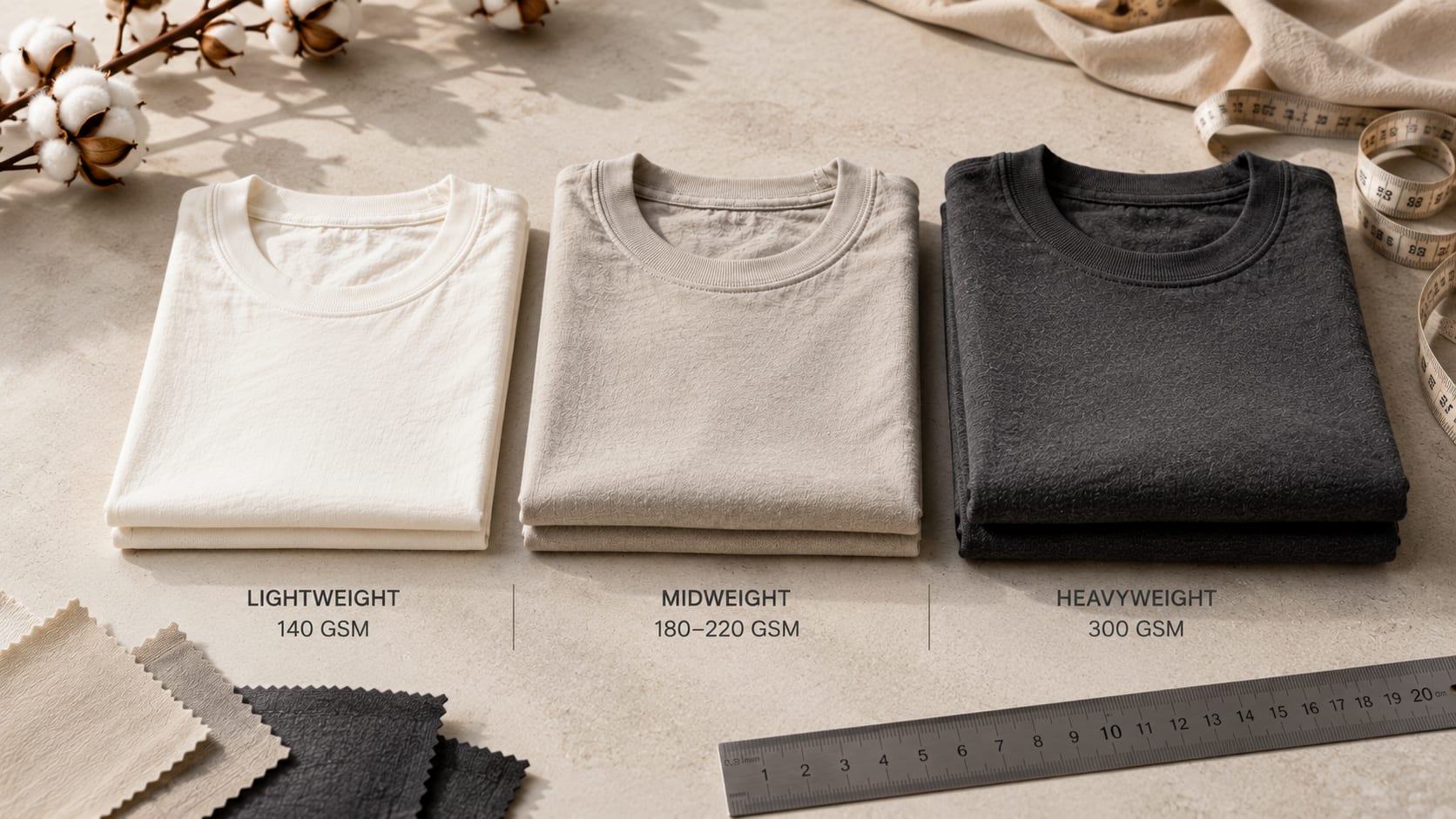
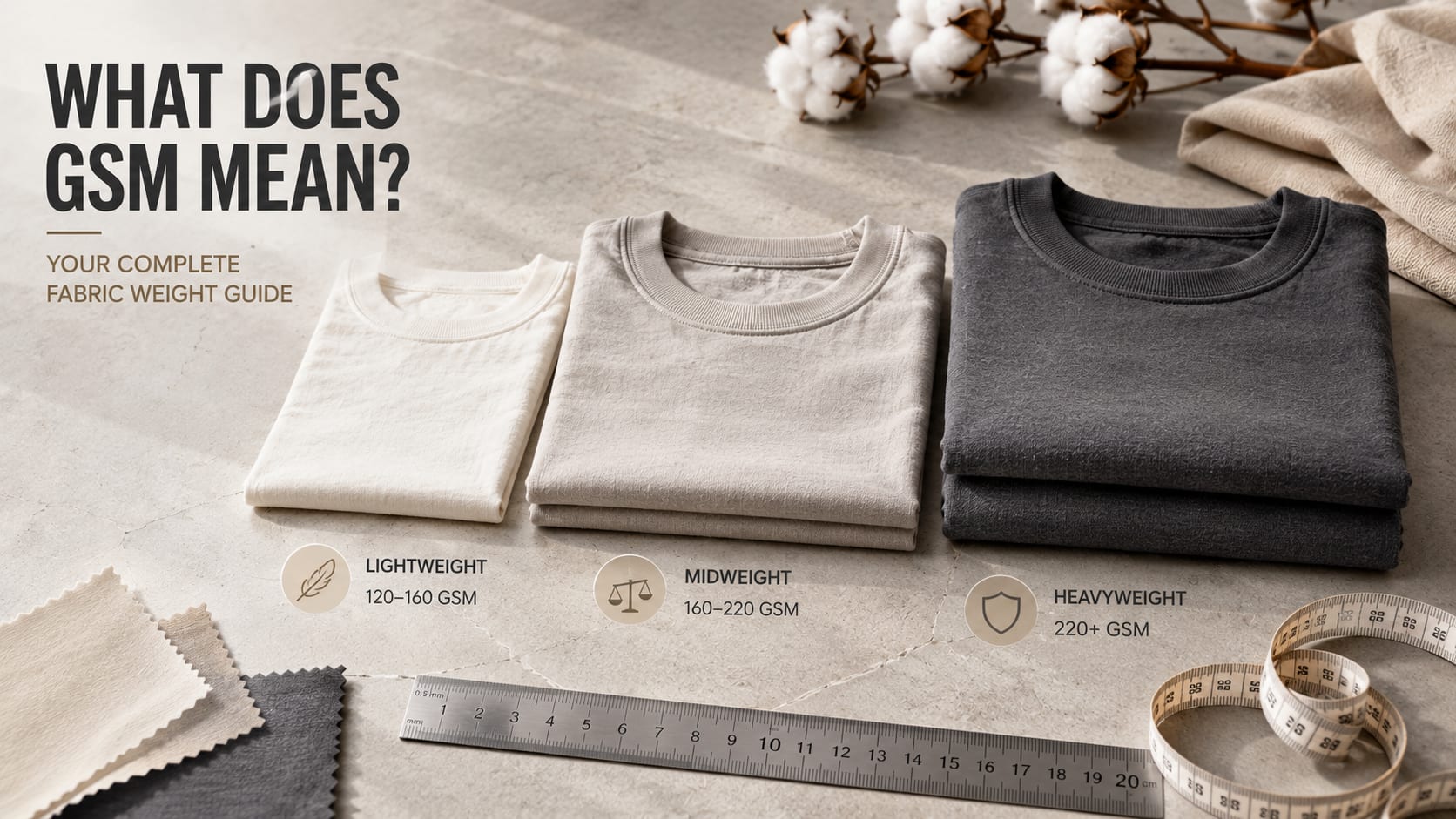
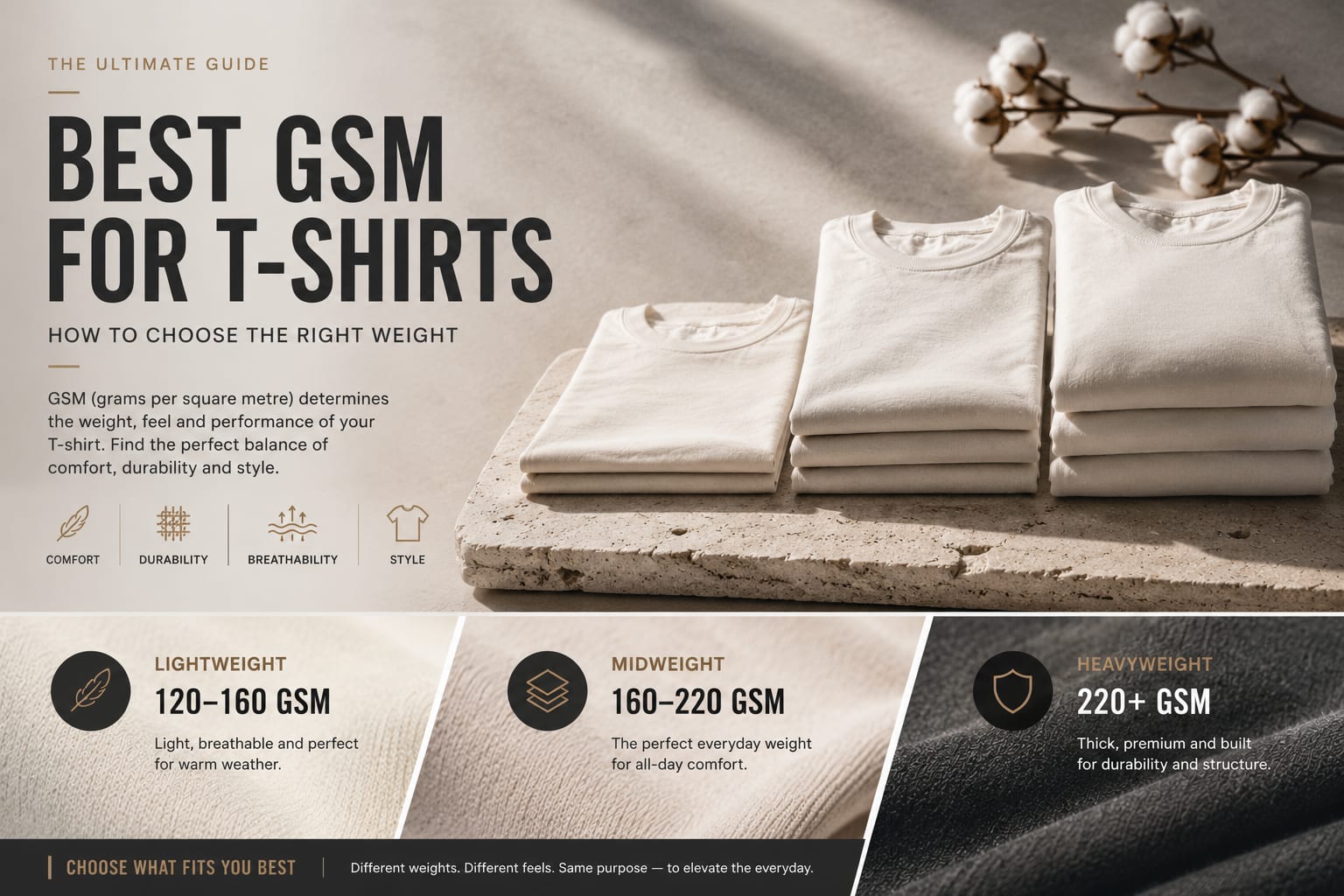
Lightweight T-Shirts (120–160 GSM)
Lightweight T-shirts are designed for maximum breathability and comfort. They use less fabric than heavier garments, making them feel cooler and easier to wear in warm conditions.
While they may not provide the same structured feel as heavyweight fabrics, a well-made lightweight T-shirt can still offer excellent comfort and durability.
Advantages
Lightweight T-shirts are popular because they:
Feel cool in warm weather.
Allow better airflow and ventilation.
Dry more quickly after washing.
Are comfortable for layering beneath jackets or shirts.
Often feel less restrictive during physical activity.
When made from premium cotton and quality yarns, lightweight fabrics can still feel soft, durable, and comfortable despite weighing less.
Best Uses
Lightweight fabrics are particularly well suited for:
Everyday summer wear.
Travel in warm climates.
Gym and fitness activities.
Base layers beneath sweaters or jackets.
People who prefer soft, breathable clothing.
If you spend most of the year in a hot climate, a lightweight T-shirt may provide the best balance of comfort and practicality.
Midweight T-Shirts (160–220 GSM)
Midweight T-shirts are often considered the most versatile option. They provide a balance between breathability and durability, making them suitable for a wide range of everyday situations.
Many brands choose this GSM range because it appeals to the broadest audience and performs well in different seasons.
Advantages
Midweight fabrics offer several benefits:
Comfortable throughout most of the year.
More durable than many lightweight fabrics.
Better shape retention over time.
A slightly more substantial feel without being overly heavy.
Suitable for a wide variety of styles and fits.
For many people, this range offers the best combination of comfort, performance, and longevity.
Best Uses
Midweight T-shirts are ideal for:
Daily casual wear.
Smart-casual outfits.
Layering during cooler weather.
Office environments with relaxed dress codes.
General-purpose wardrobes.
Because they perform well in many situations, midweight fabrics are often the safest choice if you’re buying your first premium T-shirt.
Heavyweight T-Shirts (220 GSM and Above)
Heavyweight T-shirts are known for their substantial feel, structured appearance, and long-lasting durability. They have become increasingly popular in premium fashion and modern streetwear, where a thicker fabric contributes to both comfort and style.
While heavyweight fabrics aren’t the ideal choice for every climate or occasion, they offer several advantages that appeal to people looking for a more premium garment.
Advantages
Heavyweight T-shirts offer several notable benefits:
A more structured fit that drapes well on the body.
Greater resistance to stretching and sagging.
Improved durability for frequent wear.
Better opacity, making lighter colours less transparent.
A premium feel that many people associate with high-quality clothing.
When combined with quality cotton, careful construction, and strong stitching, a heavyweight T-shirt can maintain its appearance for years with proper care.
Best Uses
Heavyweight fabrics are particularly well suited for:
Oversized T-shirts.
Premium streetwear.
Autumn and winter outfits.
Layering with jackets and outerwear.
People who prefer a substantial, structured feel.
If you enjoy clothing that feels solid and holds its shape throughout the day, a heavyweight T-shirt may be the right choice.
Which GSM Is Best for Different Situations?
Instead of asking which GSM is best overall, it’s more helpful to choose a fabric weight based on how and where you’ll wear the T-shirt.
Everyday Wear
For most people, 160–220 GSM offers the best balance of comfort, durability, and versatility.
This range works well in a variety of climates and is suitable for casual outfits, layering, and everyday use.
Hot Weather
If you live in a warm climate or spend a lot of time outdoors, a 120–160 GSM T-shirt is often the most comfortable choice.
Lighter fabrics generally allow better airflow and feel cooler against the skin, making them ideal for summer and tropical environments.
Streetwear
Many premium streetwear brands favour fabrics between 220 and 300 GSM.
These heavier materials create a structured silhouette, maintain their shape well, and complement oversized fits that have become increasingly popular.
H3 — Workwear
For physically demanding jobs or situations where durability is a priority, 220 GSM and above is often a practical option.
Heavier fabrics can better withstand frequent wear and repeated washing while maintaining their structure.
Is Higher GSM Always Better?
It’s easy to assume that the heaviest fabric is automatically the best, but that’s not how fabric quality works.
Common Misconceptions
A higher GSM does not guarantee:
Better cotton.
Softer fabric.
Higher durability.
Better comfort.
Superior craftsmanship.
For example, a 180 GSM combed ring-spun cotton T-shirt may outperform a 300 GSM T-shirt made from lower-quality fibres in softness, appearance, and longevity.
Weight is only one part of the equation.
Other Factors That Matter
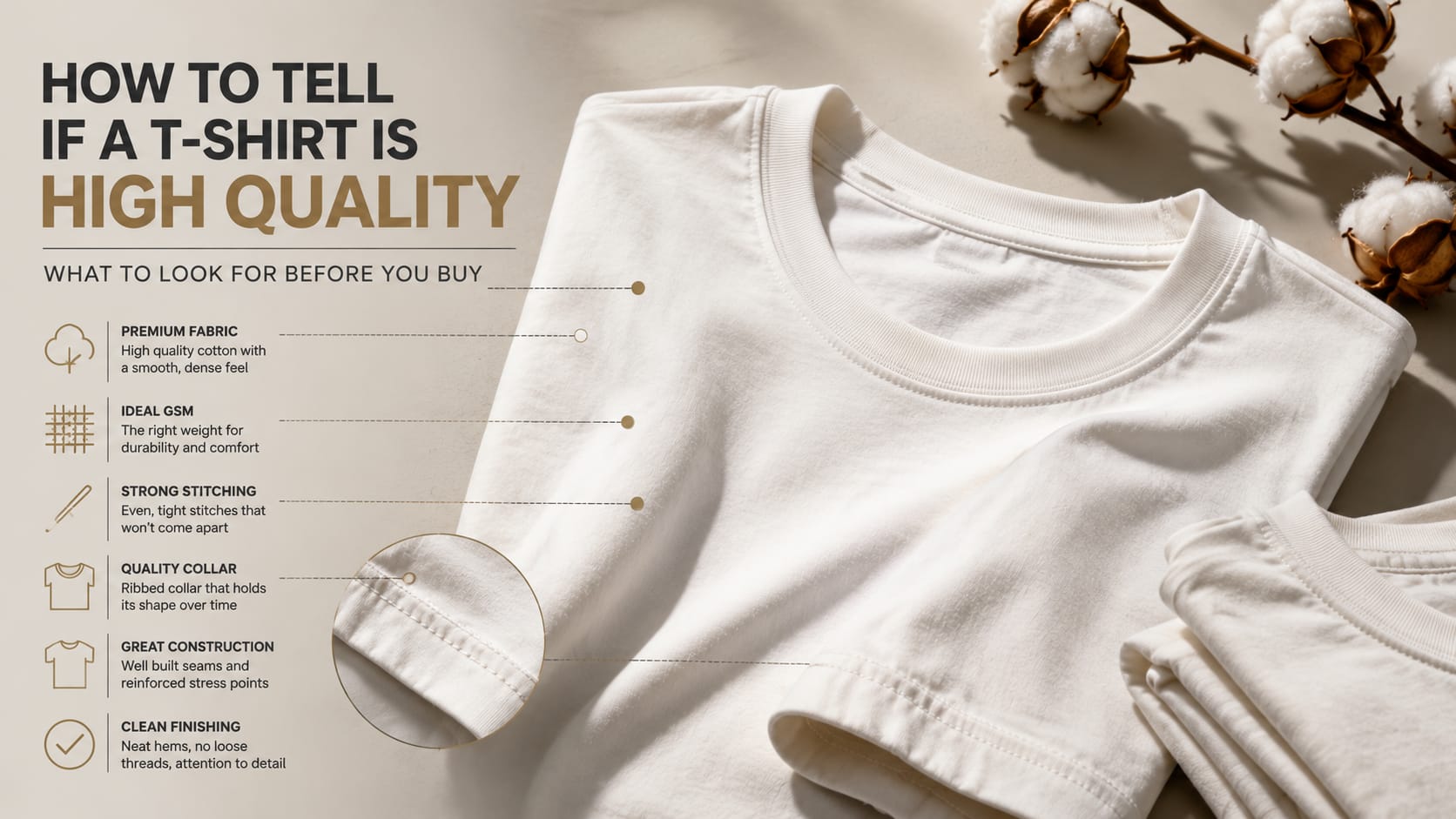
When comparing T-shirts, look beyond the GSM and evaluate the garment as a whole.
Key factors include:
Cotton quality – Longer fibres generally produce smoother and stronger yarn.
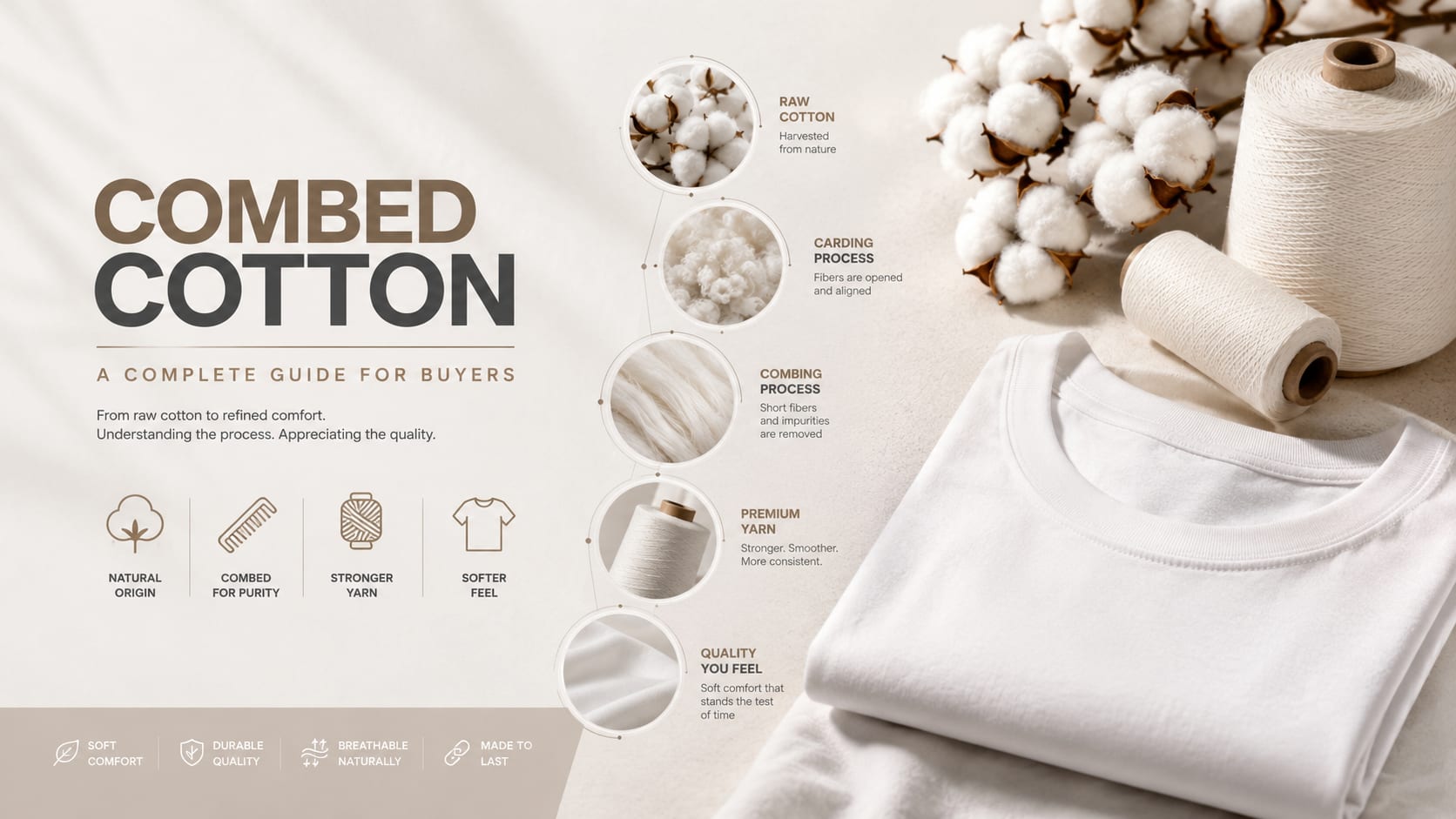
Yarn construction – Ring-spun and combed yarns often create softer, more durable fabrics.
Knitting quality – A well-knitted fabric improves consistency and performance.
Stitching – Strong, even seams contribute to a longer-lasting garment.
Fit and construction – Good pattern design and careful assembly help the T-shirt retain its shape over time.
The best T-shirt is one that combines an appropriate GSM with high-quality materials and excellent craftsmanship.
Frequently Asked Questions
What is the best GSM for everyday T-shirts?
For most people, 160–220 GSM offers the best balance of comfort, durability, and versatility. T-shirts in this range are suitable for daily wear, layering, and use throughout much of the year.
Is 180 GSM good for a T-shirt?
Yes. A 180 GSM T-shirt is generally considered a solid midweight option. It provides a comfortable balance between breathability and durability, making it a popular choice for everyday wear.
Is 240 GSM too heavy for a T-shirt?
Not at all.
A 240 GSM T-shirt falls into the heavyweight category and is commonly used for premium basics and modern streetwear. It offers a thicker feel and more structure while remaining comfortable for many people.
Is 300 GSM good for a T-shirt?
Yes, if you prefer a substantial garment.
A 300 GSM T-shirt has a thick, premium feel and is often chosen for oversized fits and luxury streetwear. It provides excellent structure and durability but may feel warm in very hot climates.
Which GSM is best for hot weather?
For warm climates, 120–160 GSM is generally the most comfortable range. These lighter fabrics promote airflow and help keep you cool during hot weather.
Does a heavier GSM last longer?
A heavier fabric may offer improved durability because it contains more material, but longevity also depends on the quality of the cotton, yarn construction, stitching, and overall garment manufacturing.
Conclusion
There isn’t a single GSM that’s perfect for everyone. The best choice depends on where you live, how you wear your clothing, and what qualities you value most.
If you prioritise breathability and comfort in warm weather, a lightweight fabric may be the ideal option. If you’re looking for a versatile everyday T-shirt, midweight fabrics provide an excellent balance of comfort and durability. For those who prefer a structured, premium feel, heavyweight fabrics are often the better choice.
Most importantly, remember that GSM measures fabric weight—not quality. A well-made T-shirt combines the right fabric weight with high-quality fibres, careful construction, and excellent finishing.
By understanding what different GSM ranges offer, you can choose clothing that suits your lifestyle and delivers better value over time.
Suggested Internal Links