 Greyfits
Cotton vs Polyester: Which Lasts Longer?
Cotton and polyester are two of the most common fabrics used in clothing, but which one lasts longer? The answer depends on various factors, including the type of use, care, and conditions. In this article, we explore the durability of cotton and polyester in different scenarios, including everyday wear, moisture exposure, and sunlight. We also discuss the benefits of blended fabrics and provide guidance on choosing the best fabric for your needs.
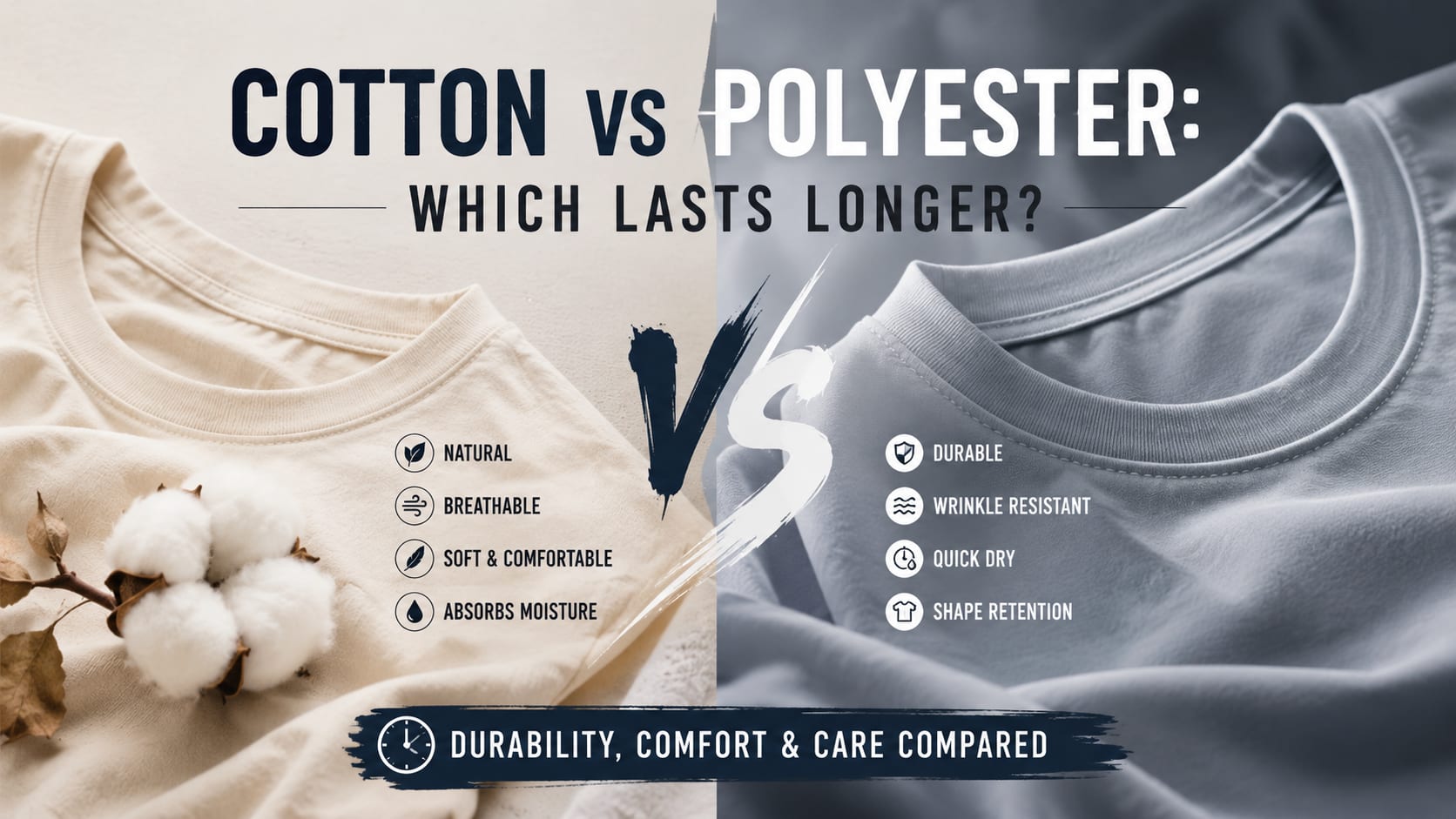
Cotton vs Polyester: A Durability Showdown
The age-old debate between cotton and polyester has sparked intense discussion among textile enthusiasts. Both fabrics possess distinct features that make them appropriate for different uses. But when it comes to withstanding the test of time, which one emerges victorious? The answer is not a straightforward one, as durability is influenced by a multitude of factors, including mechanical stress, exposure to sunlight, moisture, and repeated washing.
Unraveling the Fibers
Cotton, a natural fiber extracted from the cotton plant, boasts a soft texture and exceptional breathability. However, because cotton comes from natural plants, the fibers can differ in length and strength based on things such as the type of plant, how it was grown, and the methods used to process it. High-end cotton varieties, such as Pima or Egyptian cotton, possess longer fibers that yield stronger, smoother, and more durable fabrics.
Polyester, on the other hand, is a man-made fiber made from chemical substances derived from petroleum. Its manufactured nature ensures a remarkable consistency in length, thickness, and strength, making it a reliable choice for large-scale production. This uniformity is a key factor in polyester’s reputation for long-term performance.
Measuring Tensile Strength and Everyday Wear
In laboratory tests, polyester usually shows greater tensile strength compared to cotton, meaning it can handle more pulling and stretching before it breaks. Additionally, polyester’s resistance to abrasion makes it an ideal choice for reinforcing areas prone to friction, such as knees and elbows.
While cotton is often softer and more comfortable when worn next to the skin, it tends to fray and develop pills more easily over time, especially in areas where there is a lot of rubbing. Repeated rubbing against rough surfaces can cause cotton fibers to deteriorate faster than polyester. Nevertheless, high-quality, tightly woven cotton fabrics, like canvas or denim, can be incredibly resilient and are often used in workwear due to their ability to withstand physical strain.
Moisture and Mildew Resistance
This is an area where polyester clearly has the upper hand. Cotton’s ability to absorb a lot of moisture makes it feel comfortable in dry areas, but it can cause discomfort in humid or wet environments. Prolonged exposure to moisture can lead to mildew and bacteria growth, weakening cotton fibers and causing premature deterioration.
Polyester, being hydrophobic, repels water and dries faster, reducing the risk of mold, mildew, and moisture-related fiber breakdown. This property makes polyester an excellent choice for outdoor gear, swimwear, and activewear designed for high-sweat activities.
Sunlight and UV Exposure
Ultraviolet light can cause molecular bonds in fabric to break down over time, resulting in fading, becoming brittle, and eventually leading to the fibers breaking apart. Cotton is especially sensitive to this type of degradation, which can greatly reduce the strength of its fibers. In contrast, polyester holds up remarkably well under UV exposure, making it the go-to material for outdoor furniture covers, flags, tents, and marine upholstery.
Washing and Shrinkage
Cotton fibers absorb water and then shrink as they dry, which is most noticeable during the first few washes. Over time, repeated washing and drying can cause the fibers to weaken, leading to the fabric becoming thinner and developing holes. Using hot water or high-heat drying speeds up this process.
Polyester, on the other hand, is dimensionally stable, resisting shrinkage, stretching, and warping across multiple wash cycles. This stability is a major factor in why clothes made with a higher percentage of polyester are more likely to keep their shape and size over time compared to those made entirely of cotton.
Pilling and Appearance Over Time
Pilling refers to the formation of small, tangled fiber balls, which is a typical issue related to the durability of a fabric.
Polyester is prone to pilling due to its strong fibers, which can twist into knots rather than breaking off. Although polyester may not tear or wear out as quickly as other materials, it can look worn and faded more easily because it tends to develop pills that are noticeable over time.
Cotton, by contrast, tends to soften and thin out gracefully over time, developing a broken-in look. Many people notice that cotton tends to look more appealing over time, whereas polyester can appear worn out even though it remains strong and durable.
Blended Fabrics: The Best of Both Worlds?
Many manufacturers mix cotton and polyester to create blended fabrics, taking advantage of the strengths and weaknesses of each material. These blends are designed to offer the breathability and comfort of cotton along with the durability, wrinkle resistance, and shape retention provided by polyester. When it comes to long-term use, blended fabrics usually last longer than 100% cotton clothes, while still providing a level of comfort that is better than pure polyester.
So, Which Lasts Longer?
The answer depends on the context:
For ensuring long-lasting structure and protection against moisture, sunlight, and stretching, polyester is typically more durable, particularly in outdoor, athletic, or high-moisture environments.
For everyday comfort and a more graceful aging process, high-quality cotton can be more durable over time than polyester, even though its individual fibers are not as strong as polyester’s.
For optimal performance, cotton-polyester blends typically offer the best balance of durability, merging polyester’s strength with cotton’s softness.
Ultimately, the “winner” depends on how a garment is used and maintained. A polyester rain jacket might last many years despite harsh weather that would ruin a cotton jacket, but a high-quality cotton T-shirt, washed in cold water and air-dried, could stay wearable for a decade.
Instead of trying to find a fabric that’s better in every situation, it’s more helpful to consider which fabric suits the particular needs of a specific use, since the right choice depends on the context.